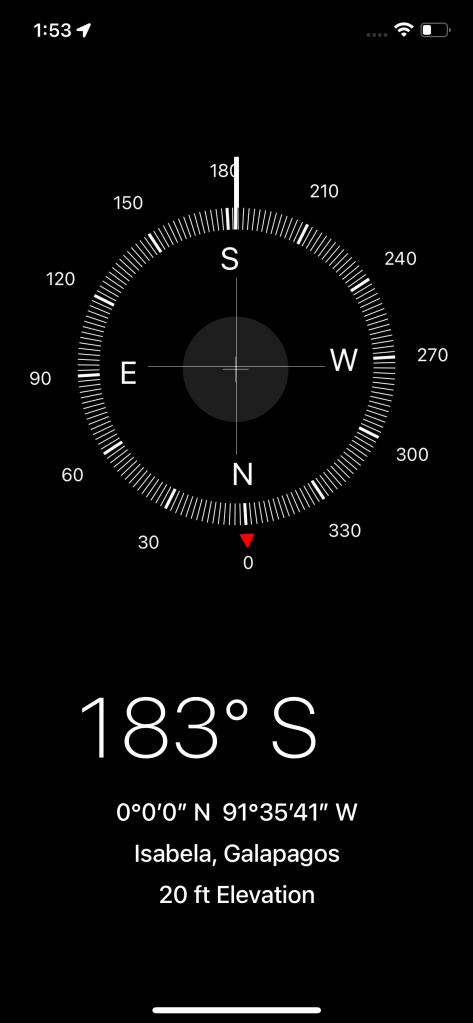
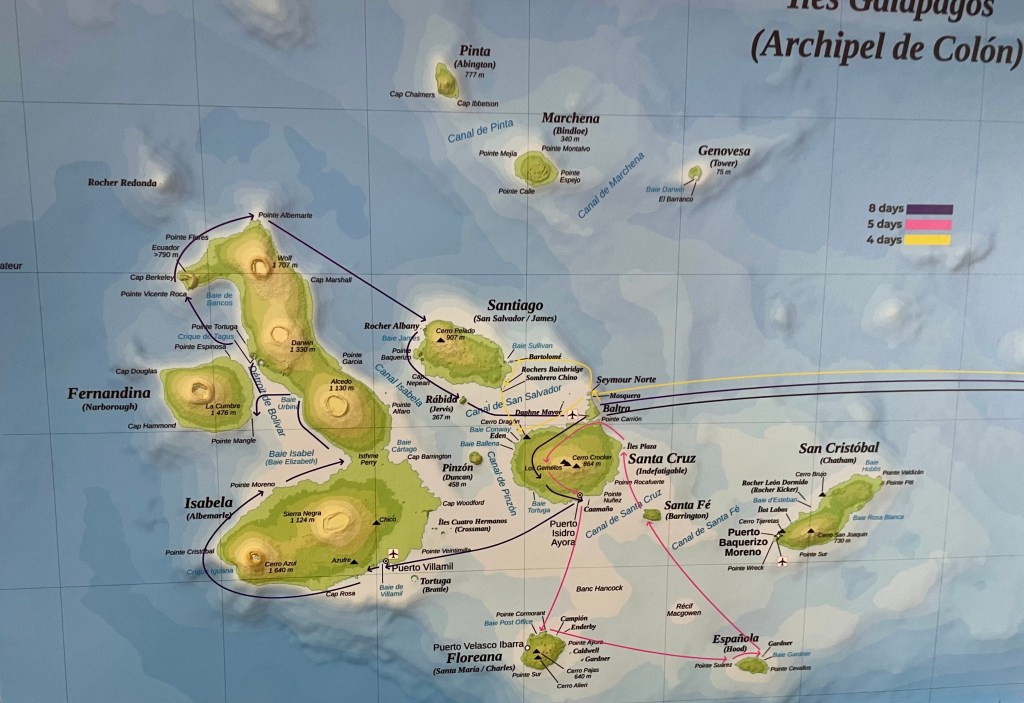
I have enjoyed writing this blog, but at times I felt a bit too preoccupied with it. I have to be online to write, which means being in the main cabin. This is where people gather before and after an outing making privacy difficult. Yesterday, I took the day off and really enjoyed the rhythms and feel of the islands without thinking about writing. This is probably my last post for this journey. The Galápagos Islands are wondrous. There is something special about being on the equator. Our crossing is documented near the top of Isabela Island.
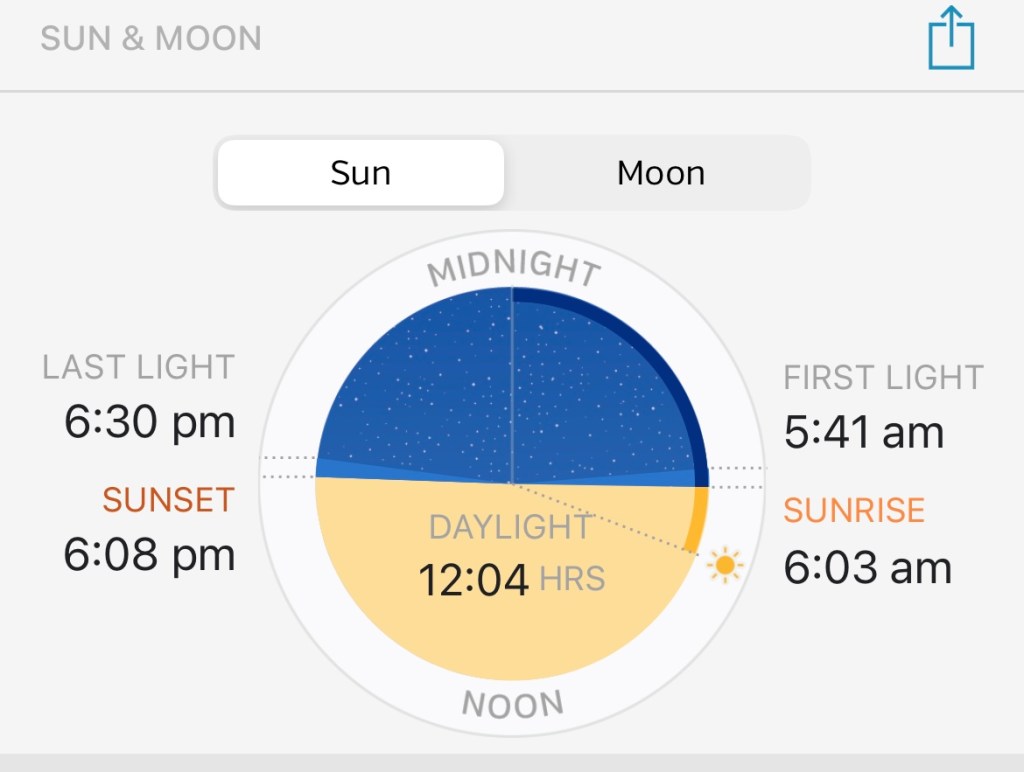
The daylight hours are consistent year-round. The annual temperature range is from 84 to 69 degrees. During our stay we the range was much tighter, 76 to 69 degrees. I said earlier that there is not much of a tide here, but that is wrong (certainly this is the only bogus information you will find in this blog); the tide changes about 2 feet.
The staff of the Carina have been excellent. The chef offered imaginative and varied meals with local produce and seafood. The dining steward makes us coffees, keeps track of our wine purchases and is very attentive at all times. Our cabin is serviced twice per day. The captain and crew are always on hand to load and unload us from the pangas. We have to wear lifejackets on board the inflatables; the crew helps us with the jackets every time. After snorkeling, the crew helps us with our gear and hoses down and hangs our suits and masks.
Our trip leader, Peter, is 55 years old. He was born in the Galapogos and is educated in botany and ecology among other subjects. Like Cesar in Peru, Peter is largely self educated. Like Cesar he is driven to learn and knows the scientific names of plants and animals. Naturally he is well versed in evolution and vulcanology. He is a season diver and hiker.
One “interesting” part of the boat ride is that we are not permitted to put any paper in the toilet. A small container is provided for any paper products. We have experienced this situation before and it doesn’t get any more comfortable – at least not yet.
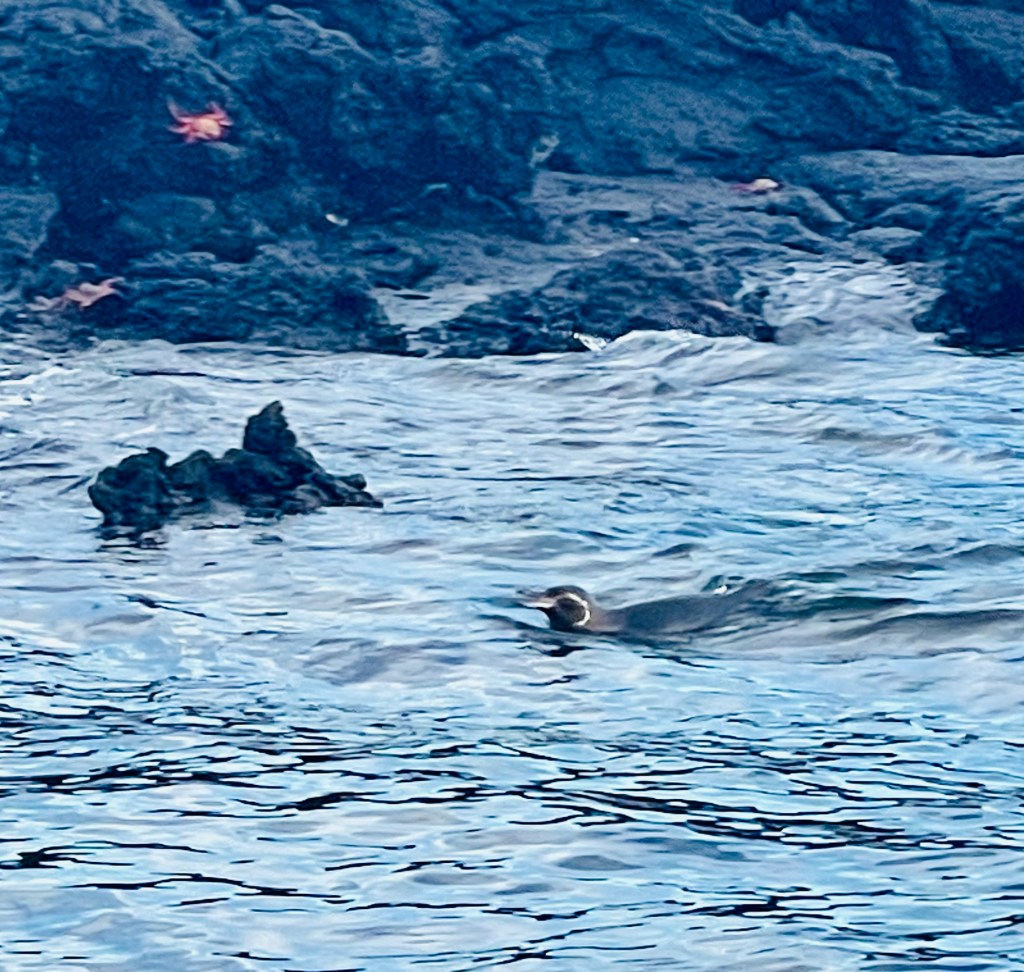
Here is a southern hemispheric penguin. During our snorkeling yesterday, we swam with some and also saw marine iguanas swimming and eating sea plants growing on the volcanic rocks under water. The iguanas only stay in the water for about 15 minutes this time of year (ocean currents bring cooler water now), but stay in for 45 minutes at other times of the year when the water is warmer. Then they climb on the volcanic rock and absorb heat from the rocks and sun. Green sea turtles are plentiful, too – but not as plentiful at the marine iguanas.
The iguanas most likely arrived here by accident from Central America. They must have arrived starving and exhausted. There was no food to eat on the desert shores. The theory is that they discovered sea plants at low tide and adapted to this diet and to the aquatic lifestyle. They also shed their more colorful skins to blend into the black rocks and to more readily absorb solar energy.
Some have asked about Ken, the man who nearly pitched into the sea. He is doing well and has wisely cut back on his activities. He is taking a number of meds and checks his heart rate and blood pressure periodically. His wife, Karen, still participates in most of the outings. Peter and the rest of us travelers keep an eye on her and lend a hand when she is treading on challenging terrain. They are charming and they are intense chroniclers of their travels with still and video cameras always at the ready.
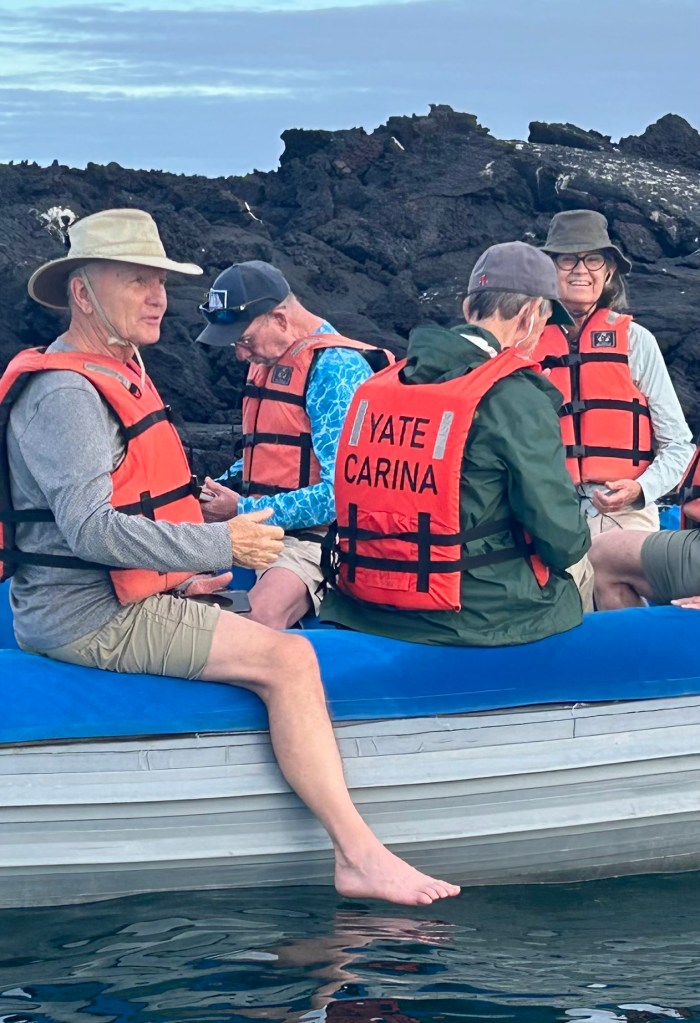
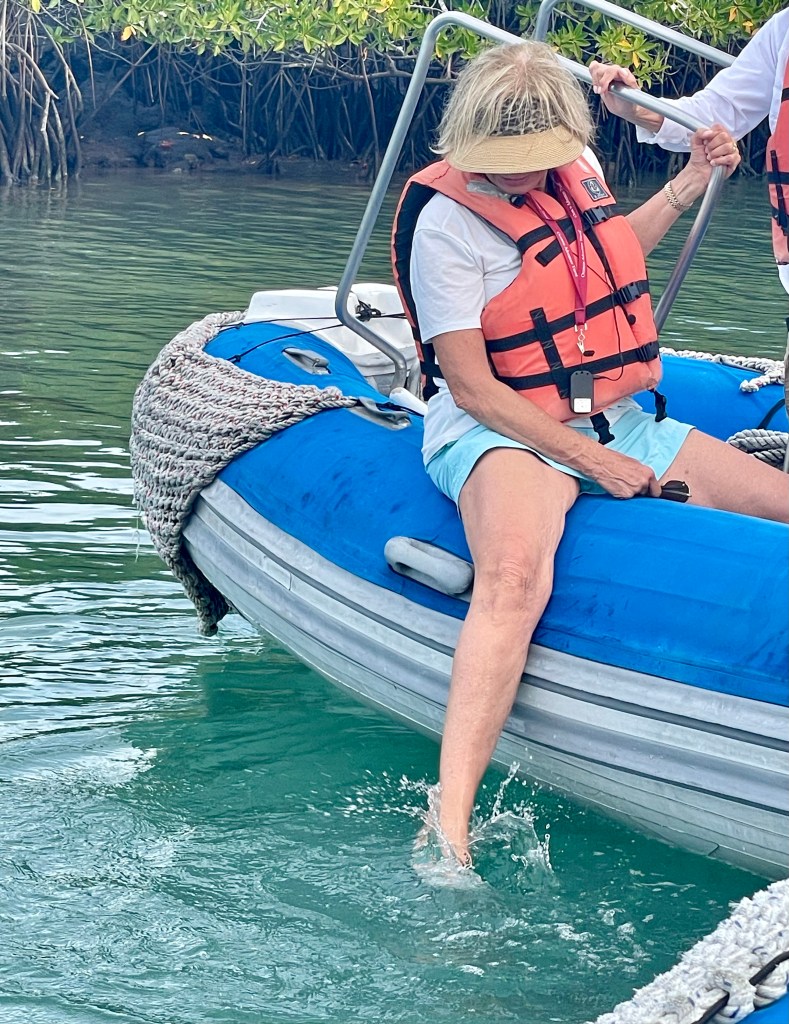
We took many panga rides exploring shorelines, caves and mangrove backwaters. Ken has his back to the camera. Pat is smiling, as usual.
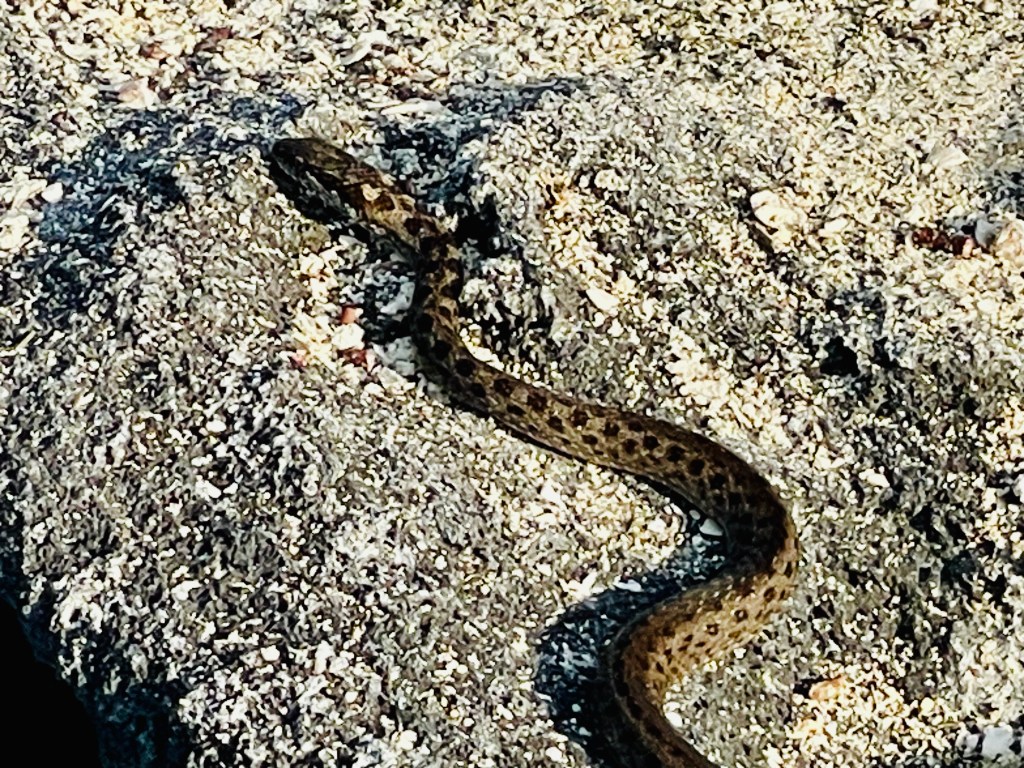
Here are an assortment of photos. The Galapogos Racer snake. It is a constrictor.
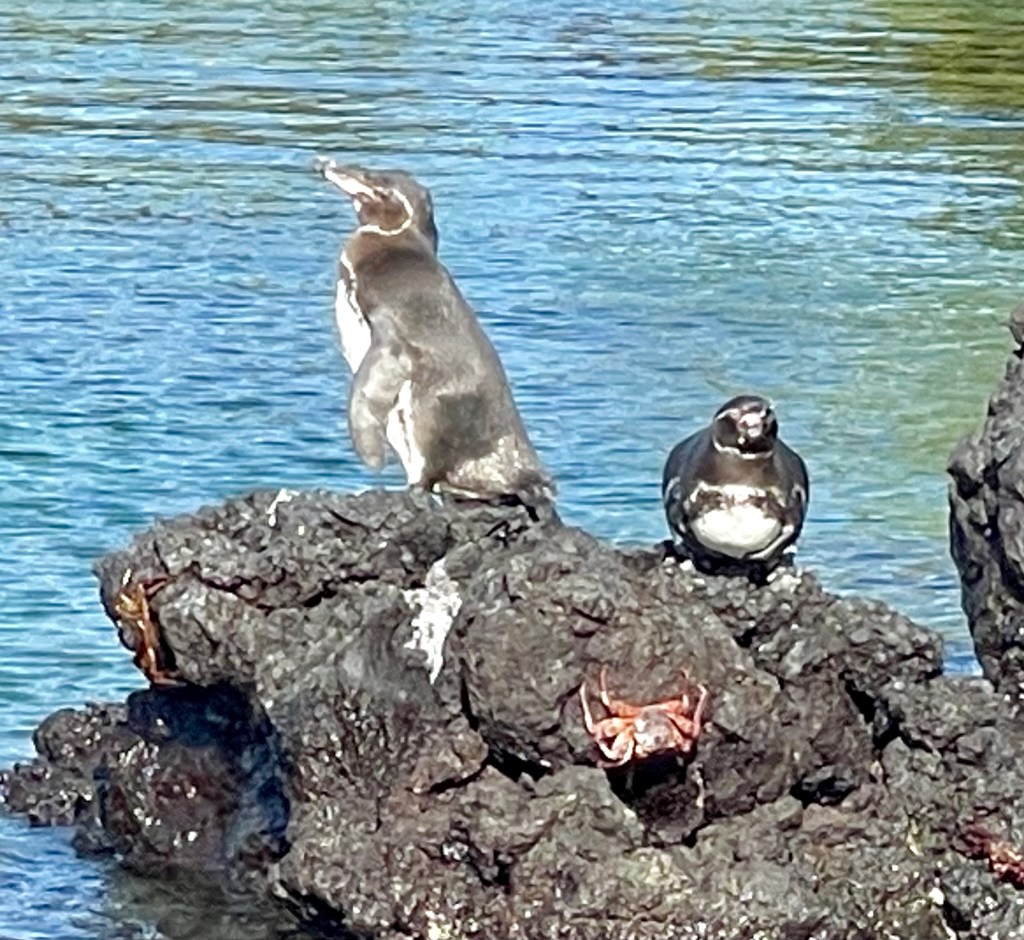
Galapogos penguins with sally lightfoot crab.
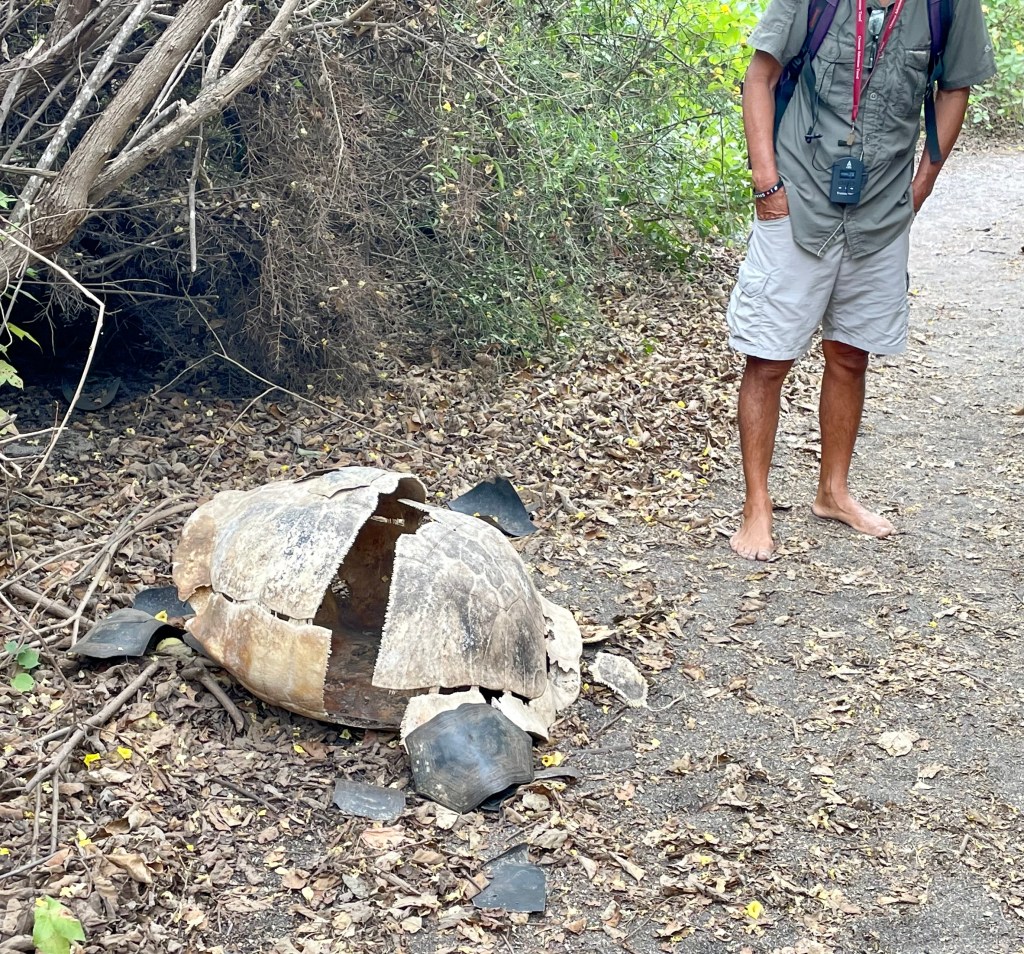
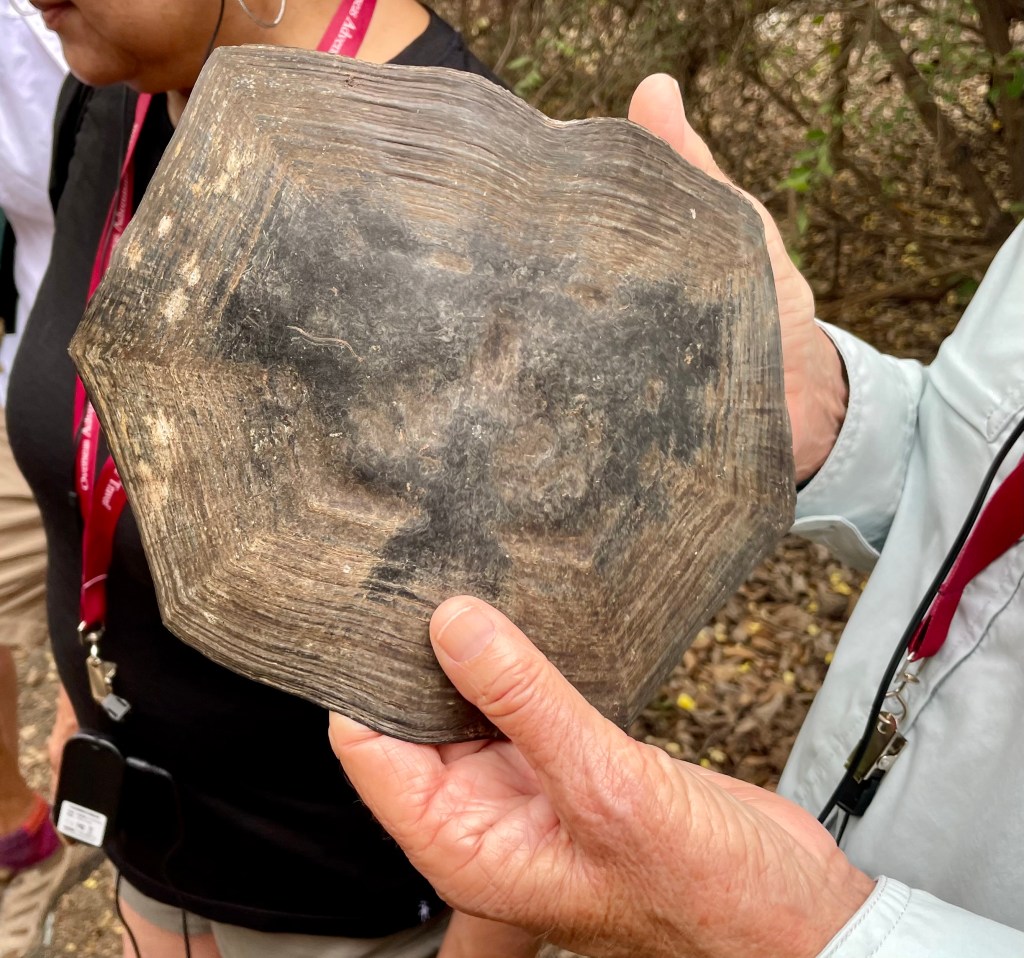
A tortoise skeleton and the outer protective material. The outer covering is tough but pliable. Peter said that this was a female about 100 years old. He also noted that tortoises can store water in their porous bones.
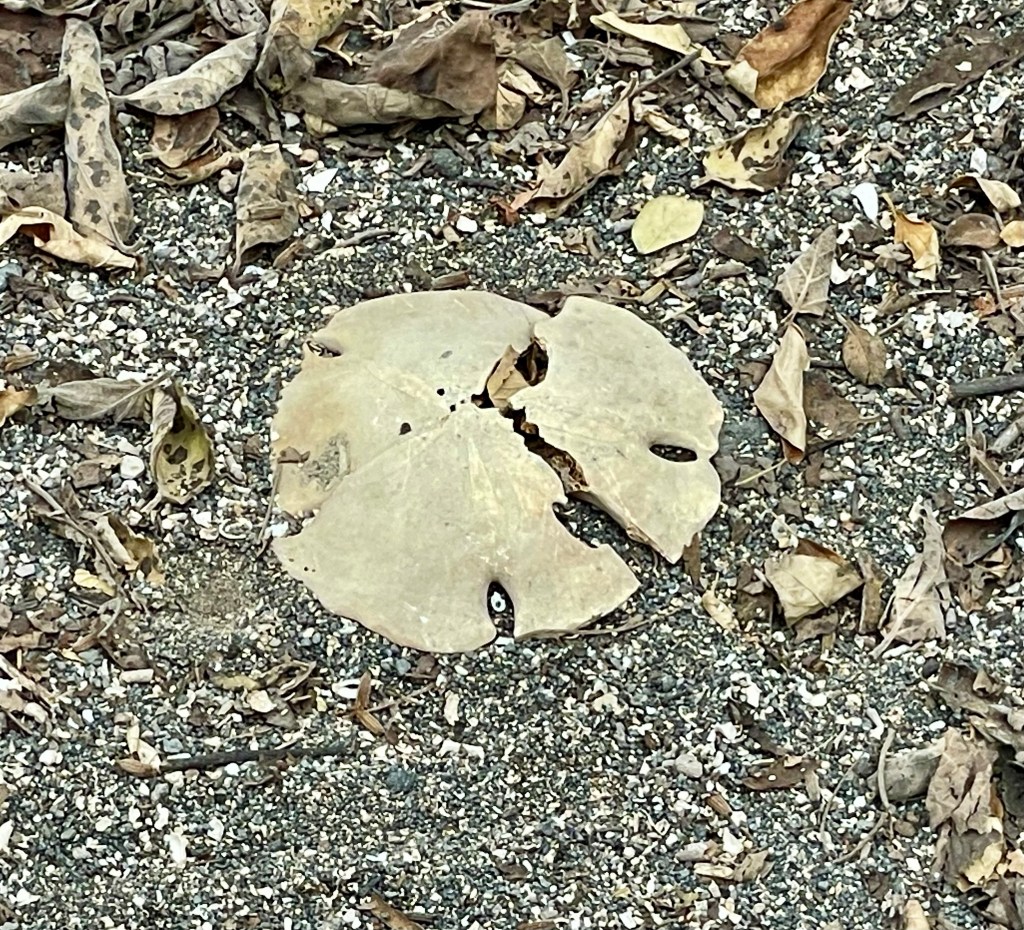
This sand dollar was once on the ocean floor – and not too long ago. There have been many up swellings on the islands. The ground can literally be pushed up 5 to 15 feet in a few minutes by molten forces underground.
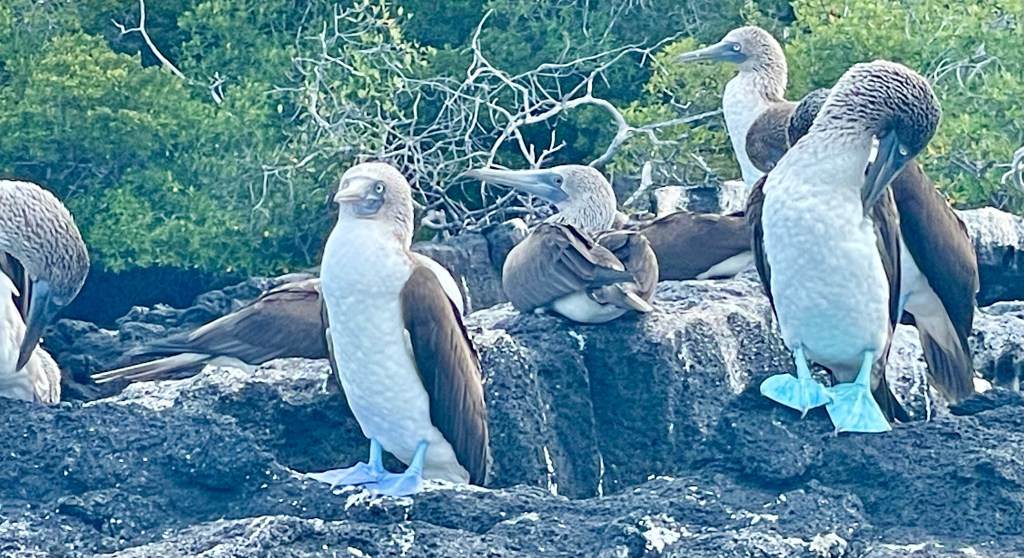
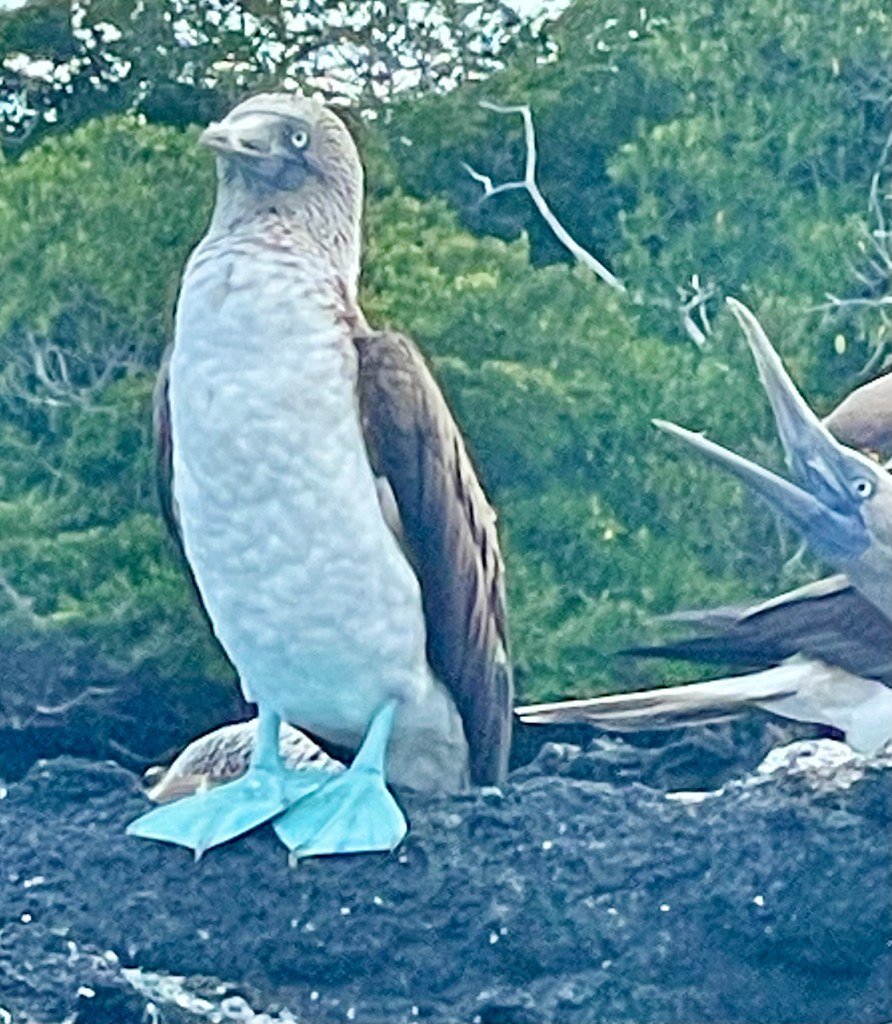
Let’s not forget the boobies! These birds are swift flyers and plunge into the water for fish at great speeds.
J trolling for sea lions. Especially the young sea lions love to play; they have no quit in them when it comes to play. They are extremely agile and quick.
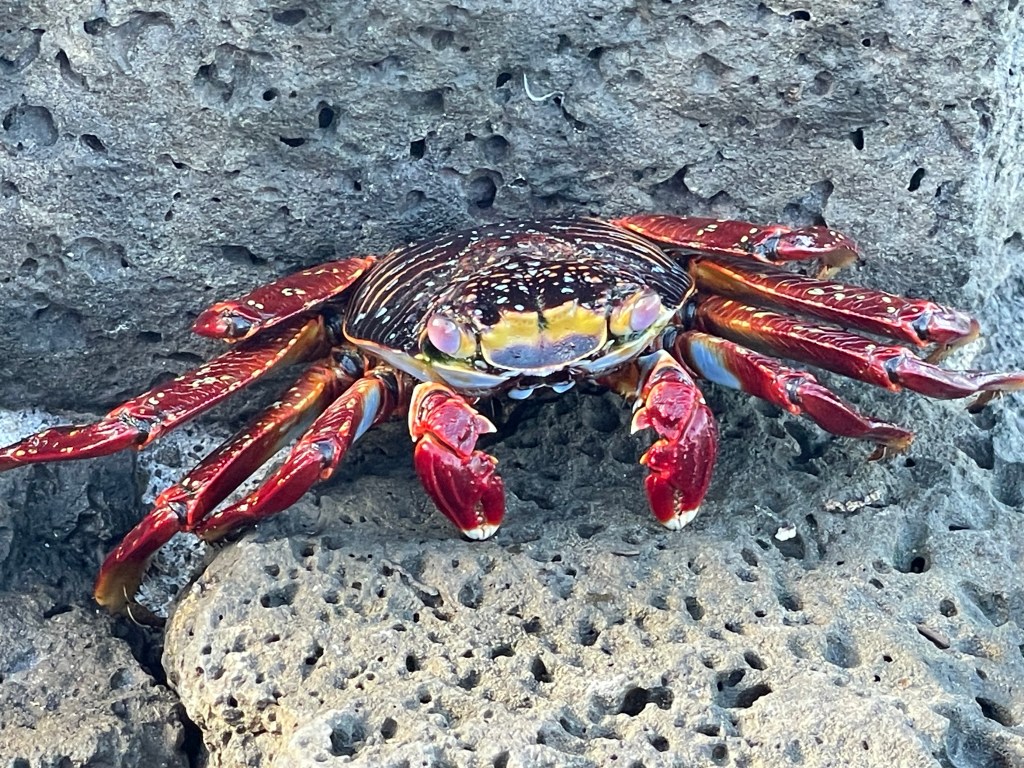
A sally lightfoot crab. They are supposedly quick, but I saw no evidence of this.
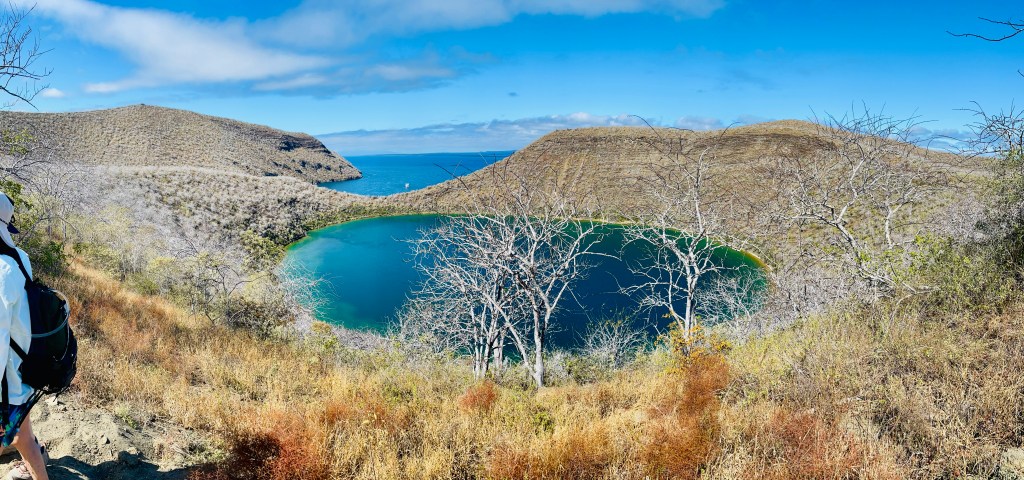
Darwin Lake on Isabela. The lake is comprised of salt water that leaches through the land barrier from the sea. Because it evaporates more quickly, it is much saltier than the ocean and therefore contains little life.
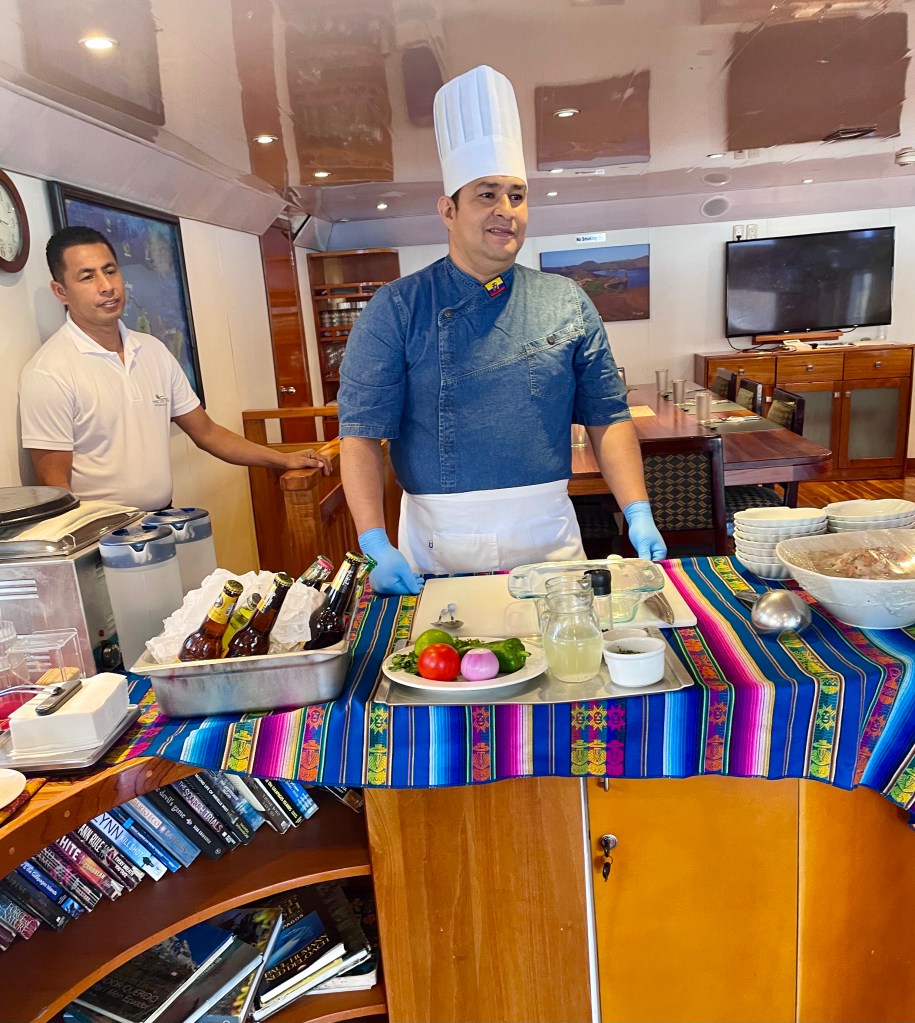
Our chef demonstrating the art of Ecuadorin ceviche. Juan, our dining staff is also in the photo.
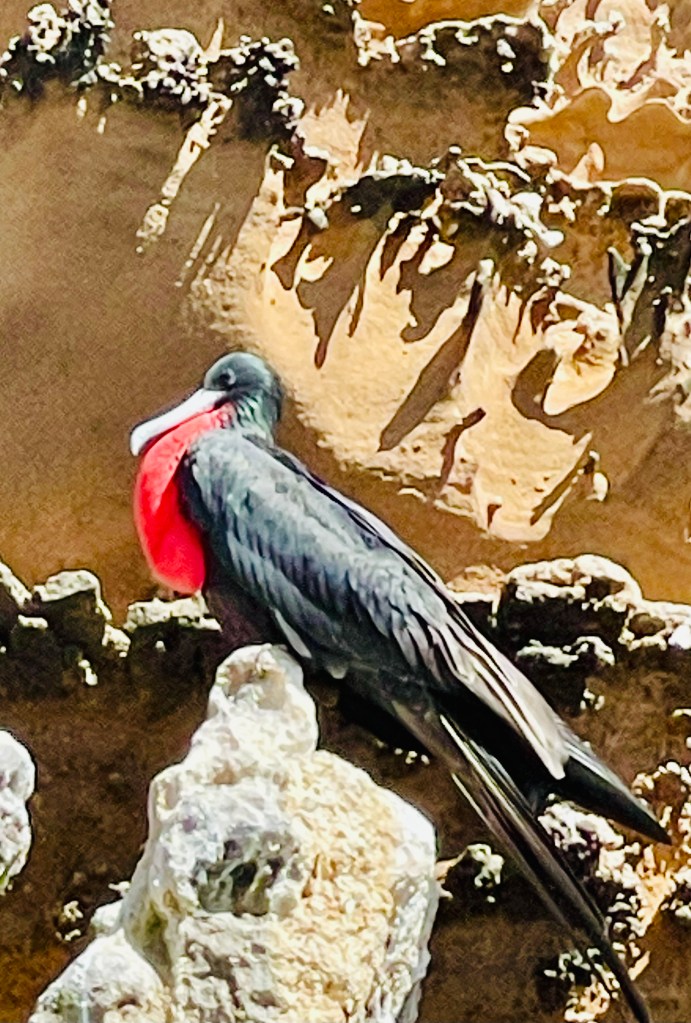
An exciting and excited male frigate bird.
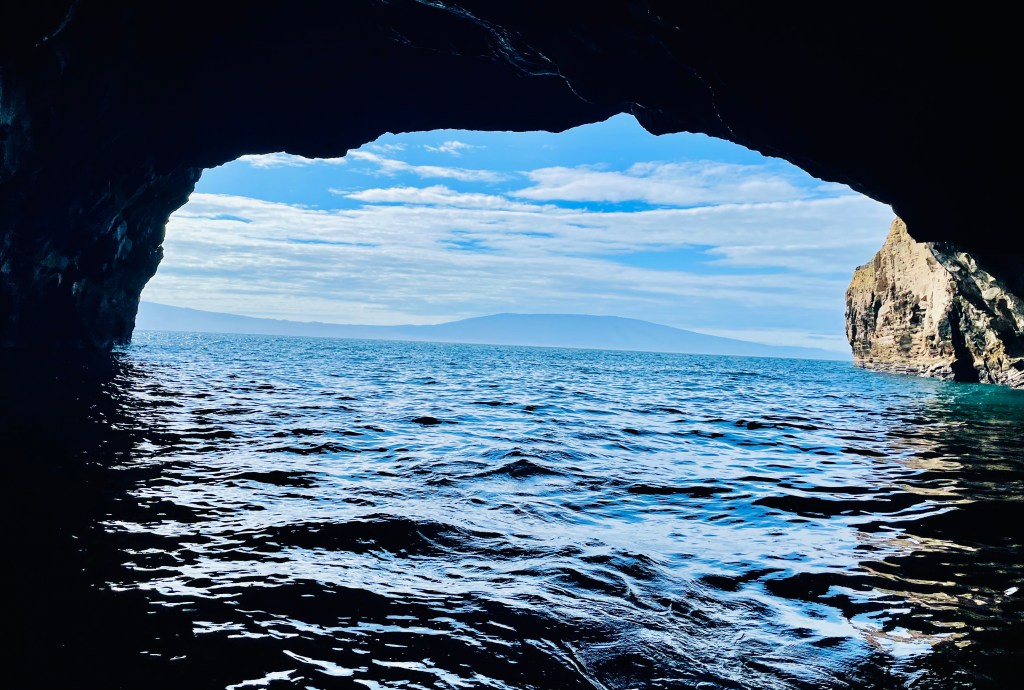
View from a sea cave at the north end of Isabela.
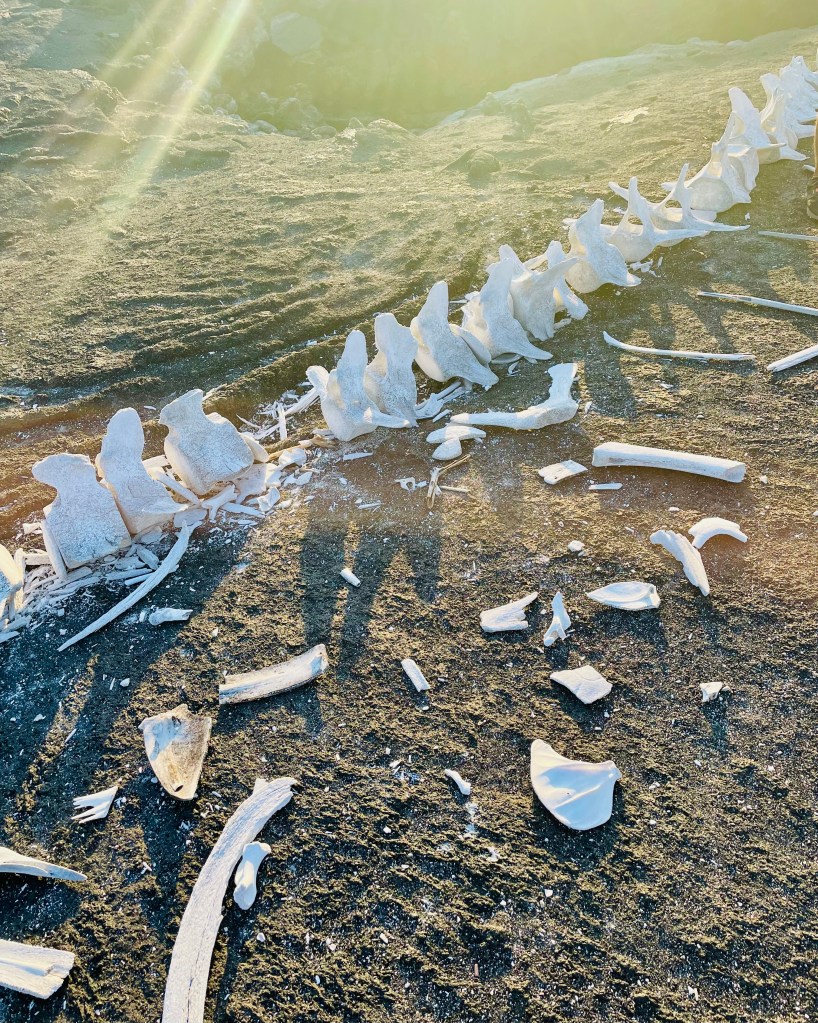
Whale bones, assembled by someone who knows how.
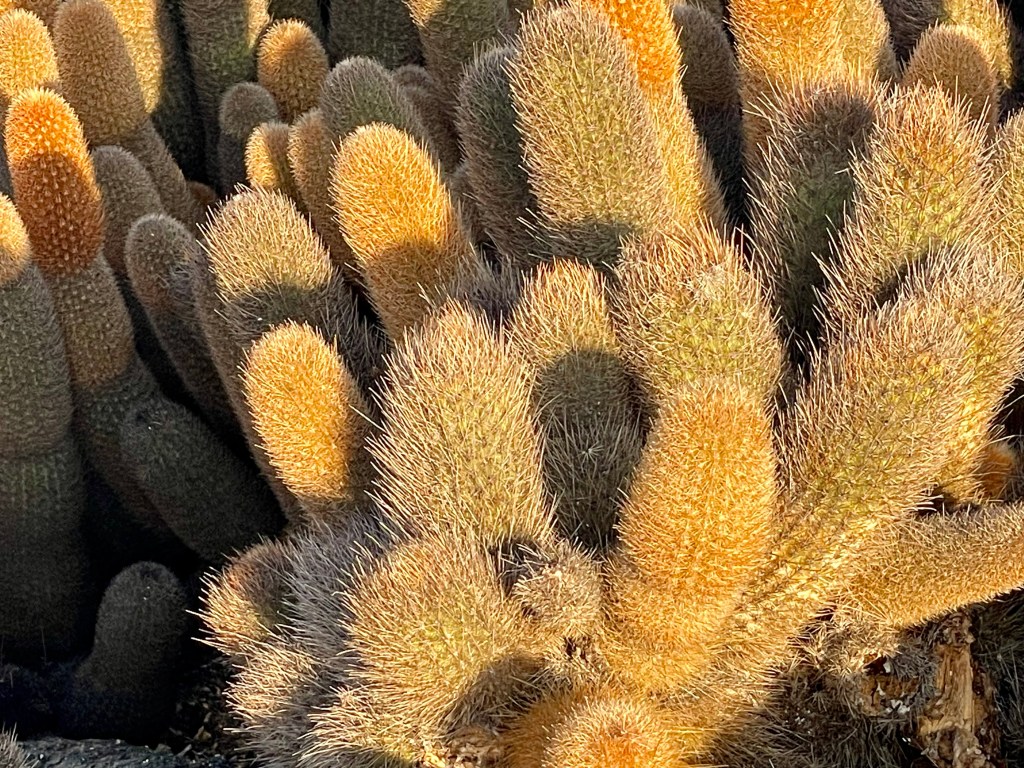
Indigenous cactus.
Not shown is the wonderland under the sea. One afternoon we snorkeled over glistening emerald sea plants covering the coral. The swaying of the plants, some purple, others, green, brown and red was a fantastic site. It is another world inside the other world of the Galapogos.
Monday, July 22
Yes, this will be the last post. I am in the nearly deserted main cabin after lunch. The meals come frequently and I haven’t passed up a desert yet. I can still squeeze into my wetsuit. Today’s snorkeling was the best so far. We swam through thousands of anchovy and enjoyed them glistening and suddenly shifting direction. Anchovies are being overfished along with sardines. The small fish are ground up and used for animal feed as well as feed for farmed fish. A chain reaction of extinctions could follow. In 2019, Ecuador alone harvested 2.1 million metric tons of anchovies.
We saw lots of sea life on our snorkel. As we entered a sea cave, I saw wet bird poop seeping through the water and steered clear. Later I did see Pelican feet a few feet away. A sea lion swam right under me. He was so close, that I opened my legs, and it felt like he swam right between them.
We did see a rare site. Penguins sat on the shore and swam by our panga in the northern hemisphere. Galapogos penguins are the only penguins north of the equator. We saw so many other creatures and landforms that I cannot include them all.
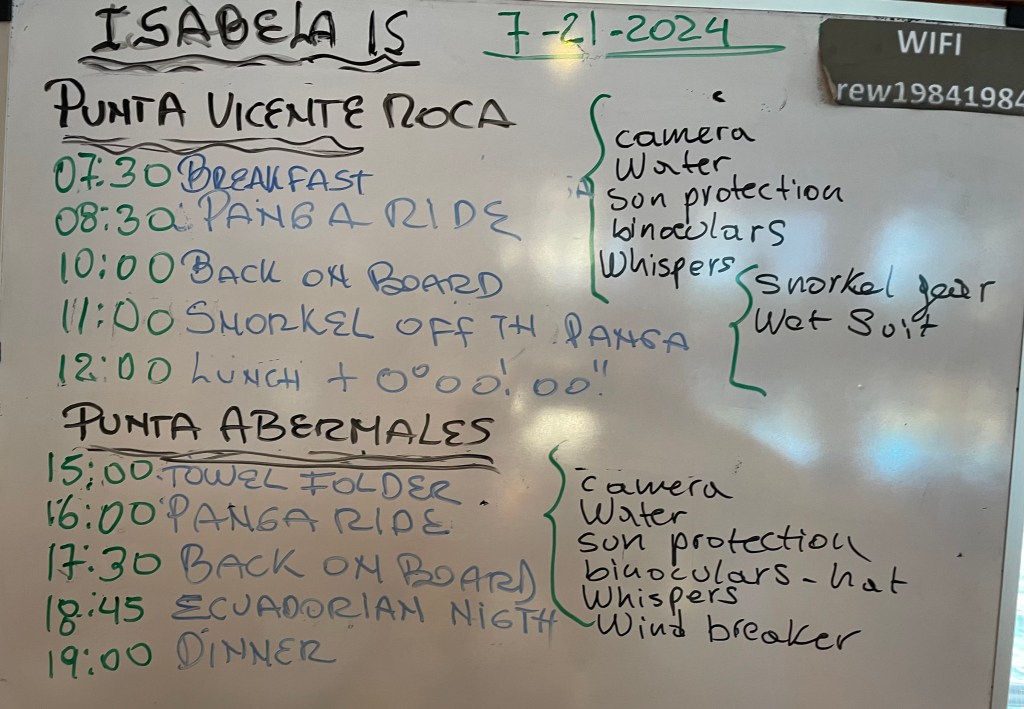
Our daily activity board for yesterday. Today we have one more snorkel and a beach walk with a wet landing. Lance is the only one who has snorkeled each opportunity. I sat out two trips.


 Observation Points 2
Leave a comment