Yes, we are still in Quito today. Pat has “stomach issues” and a cold. The idea of traveling to the airport, making the short flight to Coca, then another van and finally an hour in an open boat on the Napo river in the Amazon jungle was daunting. She had trouble making it down to a modest breakfast this morning.
So we are staying for three days here in our hotel in Quito while the rest of the group is in the jungle. It turns out that another couple elected to stay as well. Sally also had stomach issues, so she and her husband, Mike are also here in the hotel. When we are all feeling better we will do some touring, perhaps hiring a guide recommended by the hotel to drive us around.
Meanwhile, I have been taking walks exploring the neighborhood trying not to get lost. Our tour leader, Ana, advised us to be very careful because pickpockets target those of us in hotels. She advised us to only take a small amount of money and nothing else of value. Lance and I followed this advice yesterday on our exploratory walk. Yesterday and today I saw no evidence of danger, but I am still being cautious.
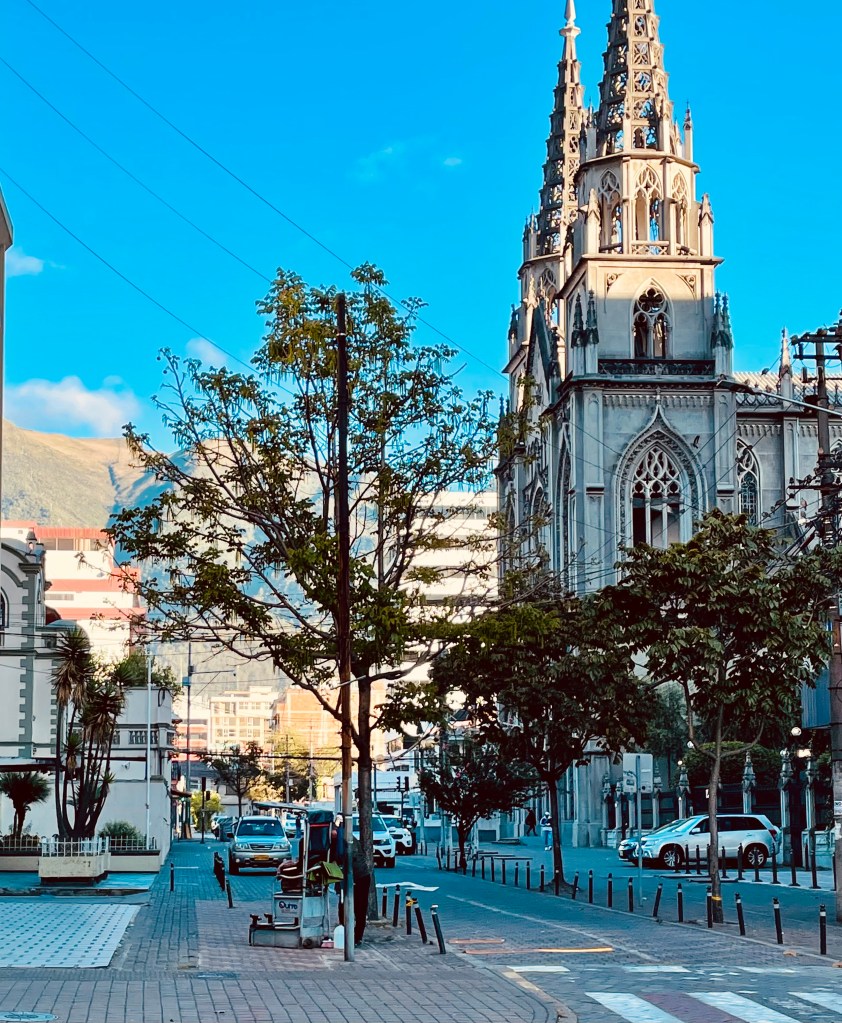
Early morning light touched an old church and the all hills at the edge of town.
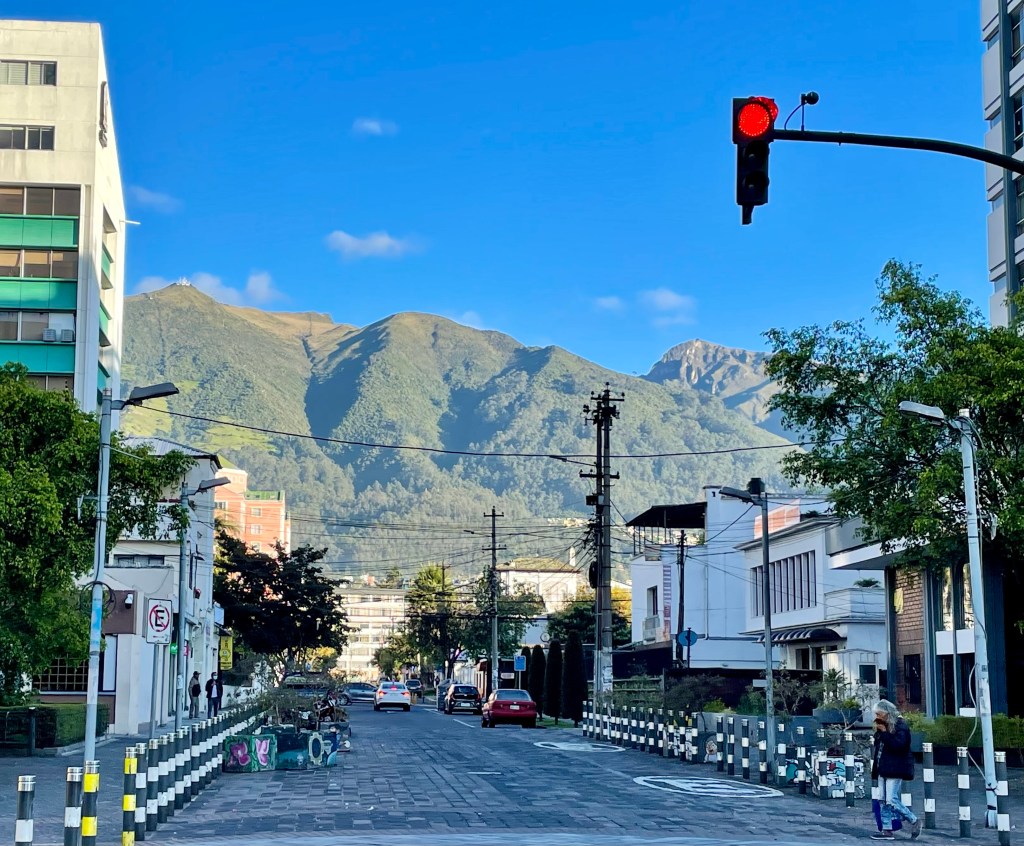
Quito is at 9,110 feet according to my iPhone. The place is ringed with high mountains and volcanoes, Chimborazo is the tallest volcano in Ecuador rising to 22,000 feet. In fact, Ana pointed out that the city can only expand in two directions due to the high mountains on each side.
Two views from the top of our hotel:
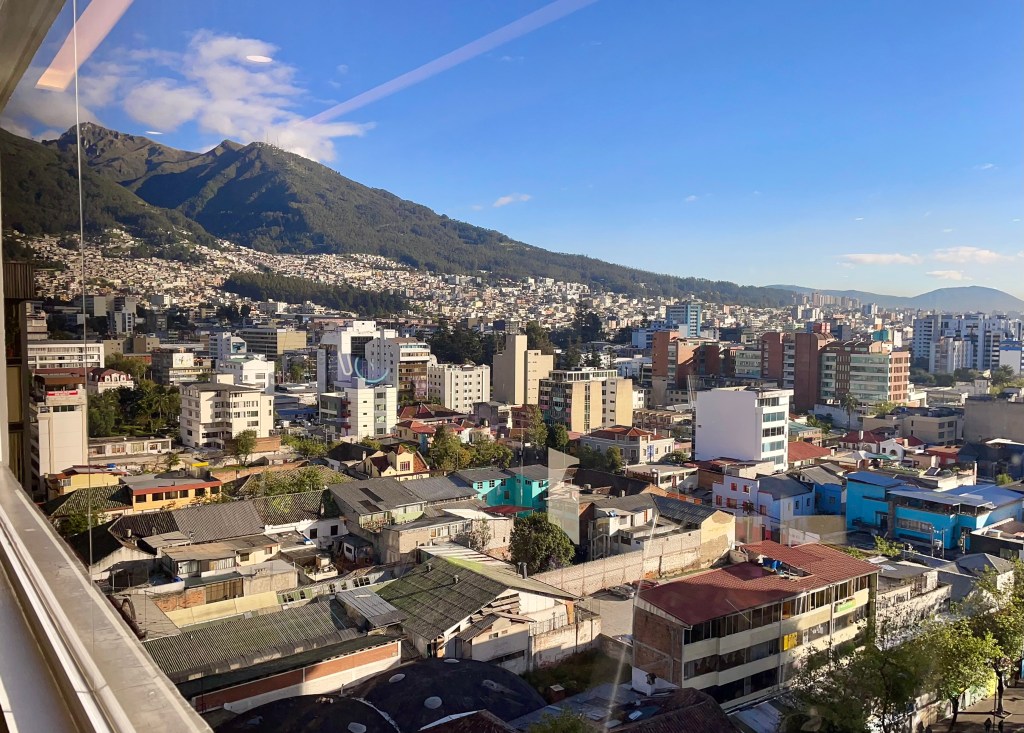
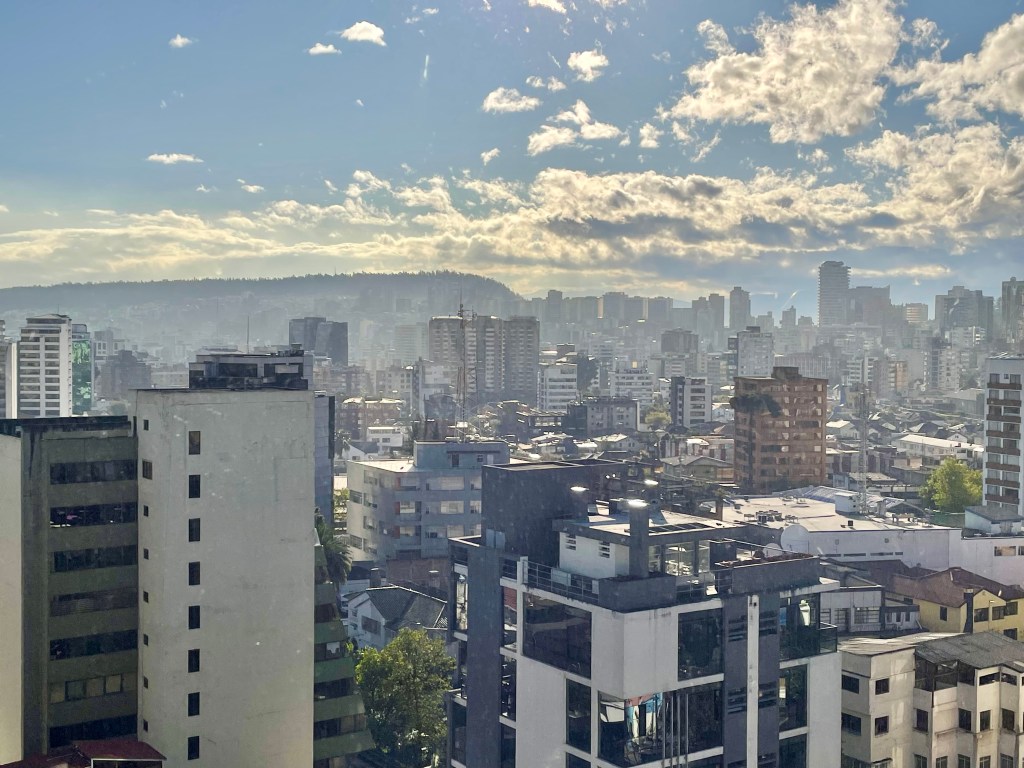
Quito’s population is nearly 3 million.
Tax is interesting in Ecuador. Our hotel charged $120 per day. The bill was $360 for our three extra days. There was no occupancy tax or sales tax or any other charge, only the quoted price. They do have an income tax, but much commerce is off the books. Without revenue government services are more limited such as education. Primary school is compulsory and free, but the transition to secondary education is poor. It is not uncommon to see very young teens selling on the sidewalks.
Oh, I forgot to mention, Ecuador uses the US dollar as its currency. I am not sure how this works for the US, but no doubt this is a good cure for the runaway inflation that has plagued some Latin American countries over the years. Ecuador adopted the US currency in 2000 after a severe debt crisis in 1999.
As an example of off the books commerce, lots happens right on the street. I bought a banana from a wrinkled old street vendor for even less that I previously paid at a small tienda. By the way, bananas are about all Pat can tolerate right now.
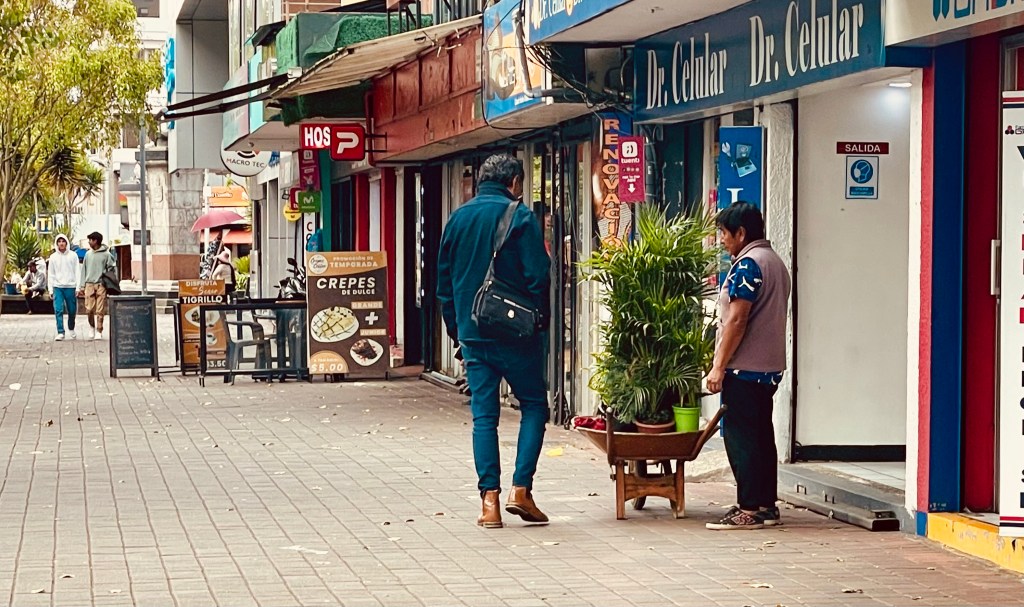
This afternoon I passed a man pushing a wheelbarrow selling plants. Yes, a variety of plants. He would stop at open storefronts offering his wares, there were no takers that I saw. A tough way to make a living I thought but then a passerby stopped and began examining his wares and asking questions. I wonder where he got the plants and how far he pushes his barrow each day and how his customer would get his purchase home. A tough way to make a living. But certainly not reported to anyone.
At around 4:30 I accompanied Pat to the hotel restaurant so she could eat part of a bowl of chicken soup. I decided to try the shrimp ceviche.
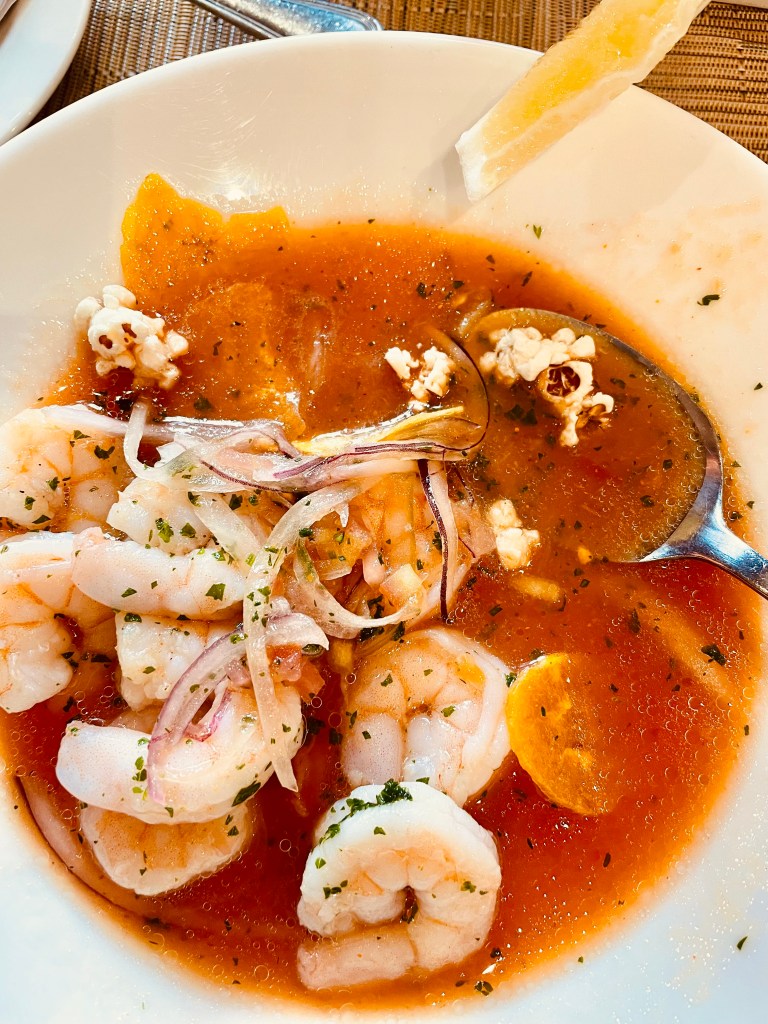
It came with this: popcorn and dried bananas. It was delicious.
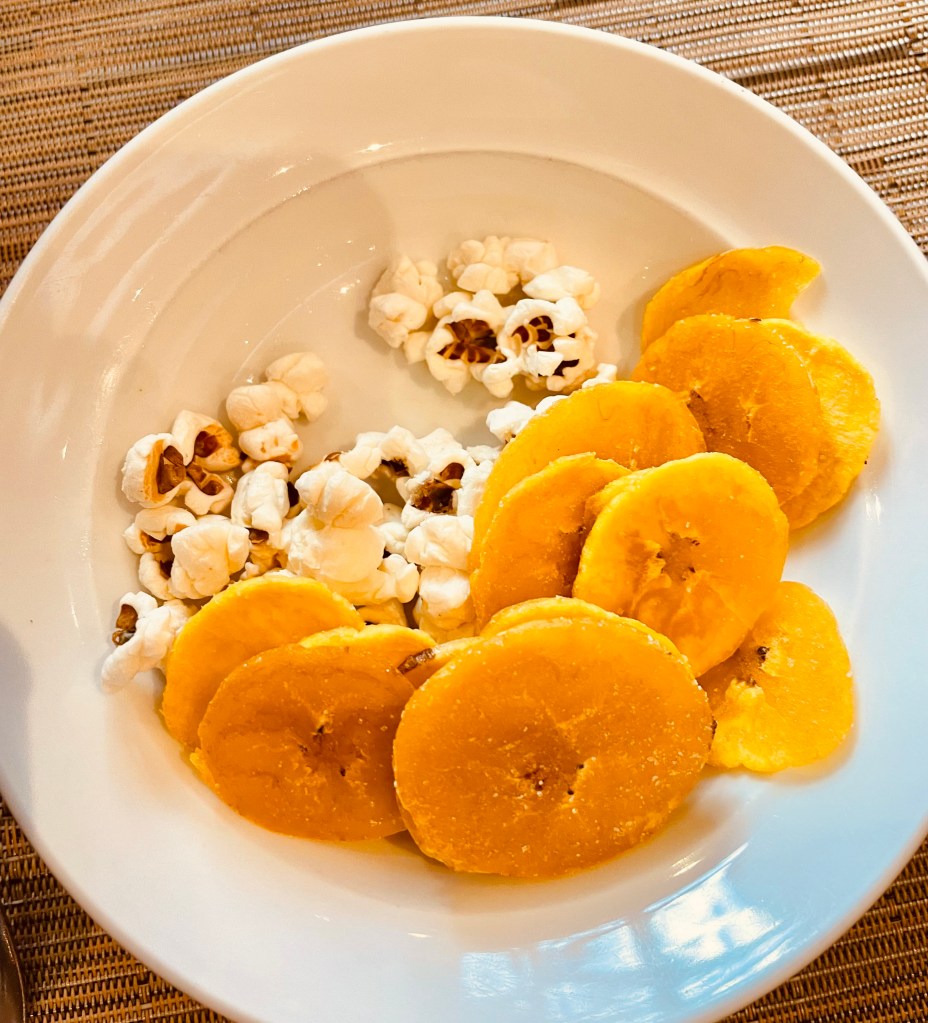
Ecuador is famous for bananas, but oil is their largest export in terms of dollars.
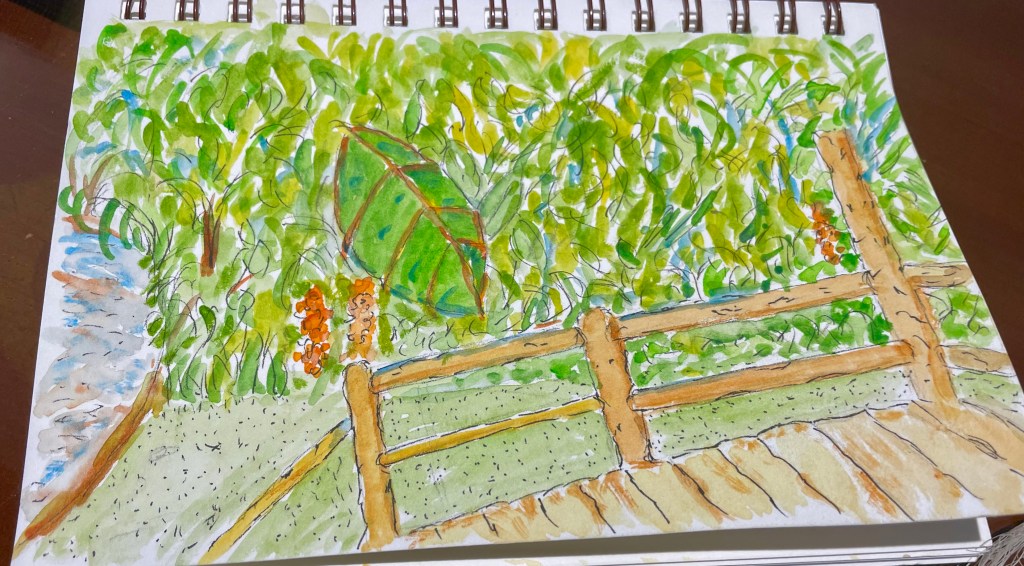
Later, I imagined our view from the front porch at our lodge in the Amazon, the Yarina Lodge is where the rest of our group is staying.


 Observation Points 2
Leave a reply to swadler9f2b1ec7ca Cancel reply